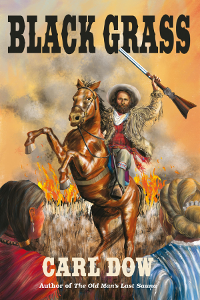
Author, journalist, father, dead at 92
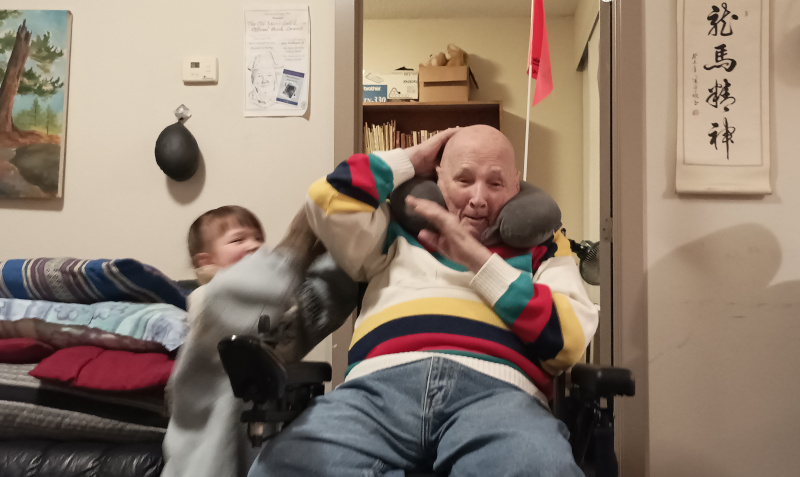
OTTAWA, June 19-August 24, 2026 — Ottawa writer Carl Dow, whose collection of stories, The Old Man’s Last Sauna, and novel, Black Grass, launched the BumblePuppy Press as a book publisher, died on May 20, 2026, at the Ottawa Hospital’s General Campus while awaiting surgery for an infected hip. He was 92 or, as he would likely have put it, almost through his 93rd year.
According to Dr. Matthew Machakra, who phoned me with the news, and to the nurse who found him, Carl had been heard talking and laughing with other patients in his ward no more than a half-hour before he was found dead by that nurse. An appropriate end to a life lived with a great deal of laughter, despite the constant presence of physical pain, years of police harassment, and frequently dire financial problems.
My father (whom I will refer to as Carl going forward) was a man who lived life as he enjoyed his food and drink: with a joyous appetite, if not always with much regard to his long-term health.
Carl had an outgoing — indeed, an outsized — personality. He was gregarious and not at all shy about talking with strangers.
He was generous in deed and spirit (and with money, when he had it). I know several people for whom he was a proverbial rock in times of crisis.
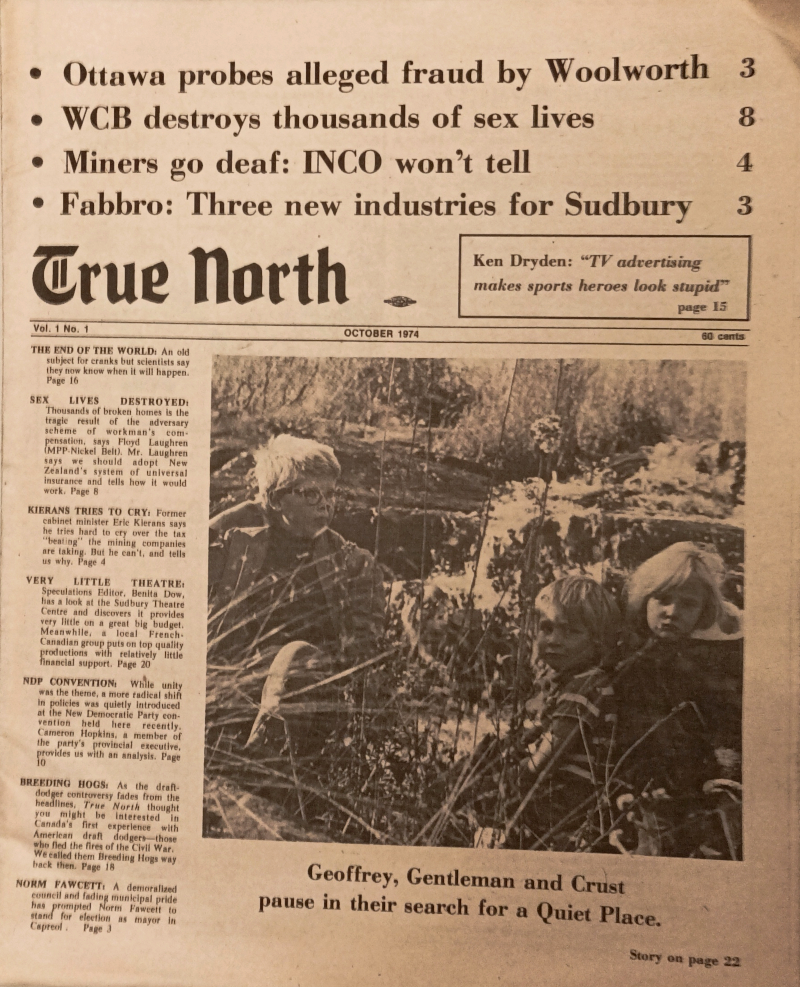
He worked with words through most of his life, starting as a reporter in the early 1950s, and working as a freelance journalist and columnist during the 1960s. In the 1970s, he started his own newspaper, True North, which aspired to become a popular left-wing newspaper, and which did become popular with readers, but not with advertisers.
He was born on July 15, 1933, just as the Great Depression was sinking its teeth into the entirety of the western world, the first of five children, and the only son, of Mary Drozdowicz (née Monuk) and Kazimir Drozdowicz, both immigrants from the Old Word, what are now Ukraine and Belarus, respectively.
His mother came to Canada as a child, while his father fought in the Russian Revolution (on the side of the Reds), but immigrated to Canada around 1920, despite having been on the winning side of that war. He became a baker, and worked as such — with an interregnum during World War II, when he was the cook at Camp Borden, until he was in his 80s, after an earlier try at retirement had failed.
At the age of three Carl began to show his iconoclasm. He organized the neighbourhood kids to lie down in the middle of the road simply to block traffic. Later, he ran with a bunch of French Canadian kids in Ottawa’s Lowertown, and learned to fight, defending himself against Orange Irish kids.
At the age of eight, he was hospitalized with Legg–Calvé–Perthes disease, a visit that lasted about a year, and which had profound effects on his health for the rest of his life. In his 40s, he had his first hip replacement, and that was followed by the other; both were operated on more than once. From his first hospitalization as a child, pain would be a companion for the rest of his life.
But he didn’t let pain or increasing disability define him, no matter that he often refereed to himself as “a cripple”.
He was a CCF and NDP supporter and activist for much of his life, running election campaigns in Montreal during the 1960s, and working closely with New Democrat MPs and MPPs in the Sudbury area in the 1970s and 1980s.
He was also a successful journalist, writing for such newspapers as The Globe and Mail, and the late Toronto Telegram and Montreal Star. He was Youth Editor for the latter when Beatlemania hit Canada, and was the first Canadian journalist to praise them as something more than a bubblegum band.
He was nominated for a National Newspaper Award in the 1960s and, while writing for national magazines such as Canadian Magazine and Weekend, Alan Walker, then managing editor of Canadian Magazine, said that he was one of the top ten writers in the country.
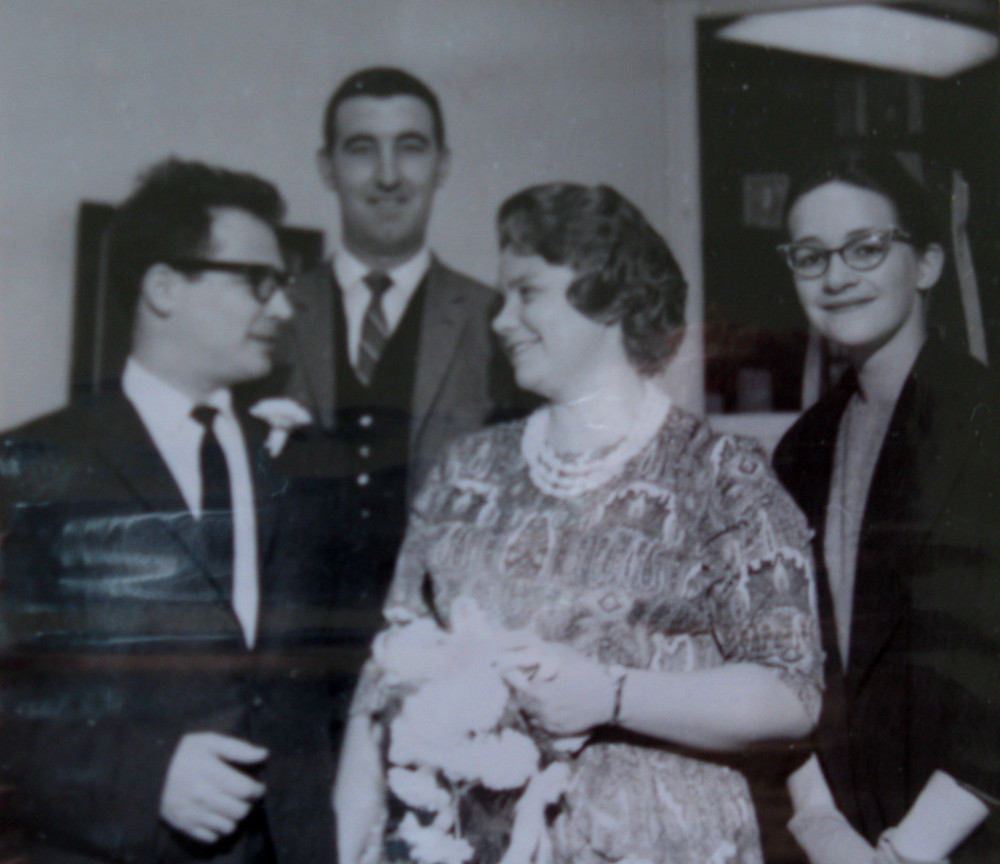
He married Benita Hart in 1963. His son Geoffrey was born in 1965, followed by Thomas, in 1967. He also acted as step-father to Benita’s first son, Larry Schaffer.
In 1973, he and his family moved to Benita’s ancestral land on the outskirts of Sudbury, Ontario. With Benita’s uncle, Ray Paivio, he built a house (Carl gave Ray all credit for the fact that that building still stands 55 years later, having barely shifted a centimeter. “I pounded 90% of the nails, but Ray was a poet with wood. We filled only two green garbage bags with left-over pieces, he was so precise.”)
From that un-serviced house (no running water, and electricity provided via a daisy-chain of extension cords duct-taped together and laid through the bush from Benita’s parents’ house a quarter kilometre away), Carl and Benita started a labour-oriented newspaper, True North, which was quite popular with readers, if not so much with advertisers.
Benita left the house in the bush around 1975 or 1976, and Carl found himself spending more and more time in Toronto, where he continued publishing True North, as well as producing papers for various unions, and campaign materials for NPD candidates and members.
He returned to his hometown of Ottawa in the mid-1980s and lived there for the rest of his life. For a time, he produced advertorial work for the Ottawa Citizen, and also spent many years driving school bus, a job that he often said was the best he ever had.
In the 21st century, he ventured into online journalism with Truth North Perspective, and was for a time, the editor of the Humanist Perspectives magazine, but his focus was on fiction.
In 2013, the BumblePuppy Press released his collection of stories, The Old Man’s Last Sauna, and in 2019, his novel, Black Grass. He was working on a new novel, Wildflowers: The Women Who Made McCord Chronicle, when he died, and which he said was very nearly finished.
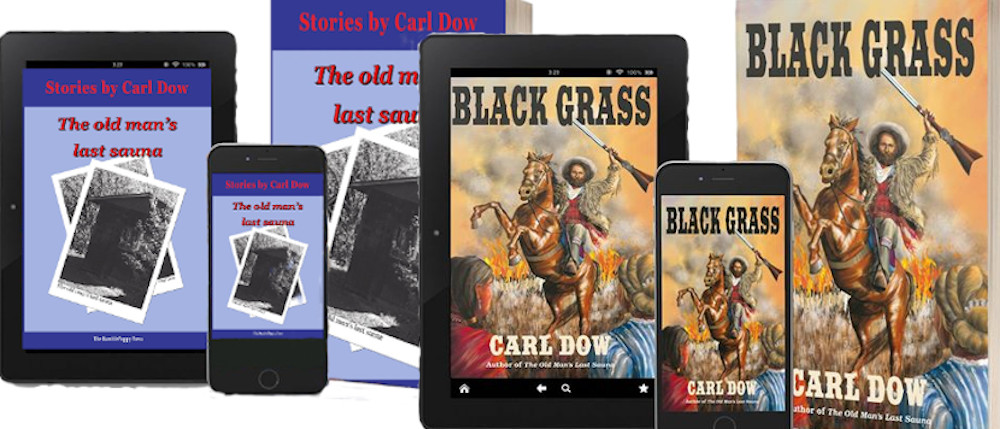
Carl Dow is survived by his sisters, Vivian and Emily, his sons, Thomas and Geoffrey, his adoptive son, Larry Schaffer, two grand-daughters, and his partner, Frances. Carl Dow was not quite 93.
As a writer, he would be most gratified if those who wish to honour his memory did so by buying one or both of his books. They are available through the usual online vendors and, or course, directly from his publisher. If you have his books, I think he would have approved of a donation to the Communist Party of Canada.
Carl was cremated in May, and his remains were scattered by myself and my daughter, on August 9, 2026. If you are interested, I spoke at some length, and the video (and transcript of my elegy) is available here.
Geoffrey Dow, publisher